Fuel pressure is the invisible force that shapes how every diesel engine behaves. While drivers often think of horsepower, torque, and turbo boost as the defining traits of a diesel, none of those characteristics exist without the precisely controlled pressure that delivers fuel into the cylinder at exactly the right moment. The relationship between pressure and combustion is so tightly linked that even minor inconsistencies in fuel delivery can change how the engine starts, idles, accelerates, and burns fuel. Understanding this relationship helps owners and technicians recognize problems early and respond to them before they grow into expensive failures.
The Foundation of Diesel Combustion
Diesel engines do not use spark plugs. Instead, they rely entirely on the heat generated by compressing air inside the cylinder. When the piston reaches the top of its stroke, the trapped air becomes hot enough that fuel injected at that exact moment ignites on contact. For this process to work cleanly, the fuel must be sprayed into the cylinder under enormous pressure, breaking it into droplets fine enough to mix evenly with the compressed air. If the pressure is too low, droplets become too large and combustion happens unevenly. If pressure spikes or drops at the wrong moment, ignition timing shifts and the engine behaves unpredictably.
Why Atomization Matters as Much as Volume
Many people assume that as long as enough fuel reaches the cylinder, combustion will take care of itself. In a diesel, that assumption fails quickly. The quality of atomization, meaning how finely the fuel is broken up as it enters the chamber, has just as much influence on power and efficiency as the total volume delivered. A poorly atomized spray leaves larger droplets that burn slowly, producing carbon, soot, and lost energy. A finely atomized spray ignites cleanly, releases its energy quickly, and contributes to the smooth, predictable power diesel owners expect.
What Generates and Controls Pressure
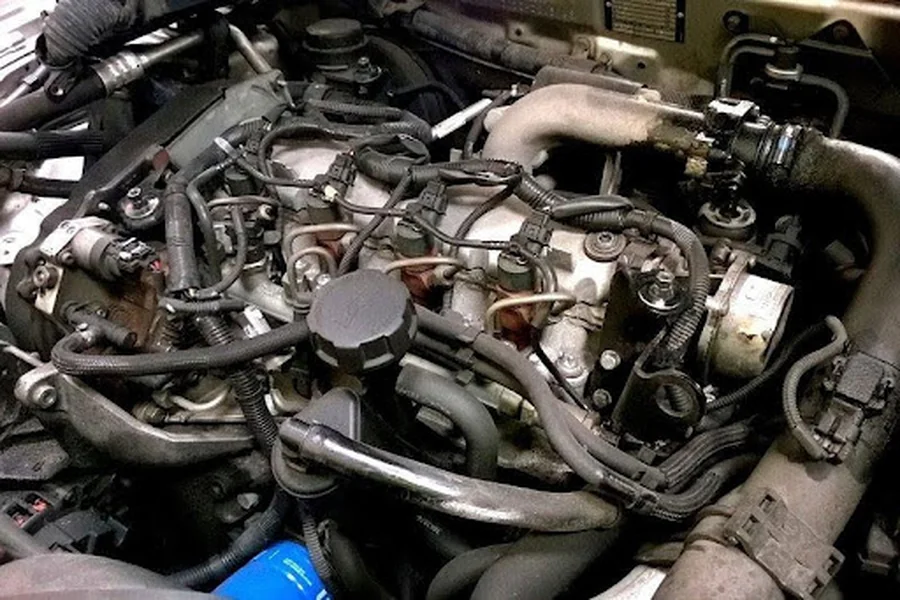
Diesel combustion depends on fuel entering the combustion chamber at extremely high pressure and precise timing. Unlike gasoline engines, diesel systems rely on compressed fuel atomization to create efficient ignition, which means even small pressure inconsistencies can disrupt combustion quality under acceleration or load. Drivers often notice the effects first through rough idle, delayed throttle response, hard starting, or increased exhaust smoke during towing and heavy-duty operation. Diesel technicians diagnosing these problems commonly inspect injectors, pressure regulators, fuel contamination levels, and the condition of the diesel fuel injection pumps responsible for generating and controlling fuel pressure throughout the combustion cycle.
A worn injection pump reduces the engine’s ability to maintain stable fuel delivery across changing RPM ranges and load conditions. Pressure fluctuations alter injector spray patterns and create incomplete combustion events that lower torque output while increasing smoke and fuel consumption. Mechanical wear inside the pump assembly can also affect injection timing, causing uneven cylinder firing and inconsistent throttle response during acceleration. High-pressure diesel systems depend on precise calibration because injectors require stable fuel pressure to atomize diesel fuel evenly inside each cylinder. Technicians usually test injector balance, rail pressure, and pump timing together since all three systems influence combustion efficiency simultaneously. Replacing or rebuilding a worn injection pump restores fuel-pressure consistency, improves combustion stability, and protects injectors from long-term stress caused by irregular diesel fuel delivery.
How Pressure Behavior Changes With Load
Fuel pressure is not a static value. It rises and falls constantly as the engine responds to changing demands, and the pump must be capable of holding its target pressure during every transition. When a diesel accelerates with a heavy load, injectors open more frequently and for longer durations, drawing more fuel from the rail. A healthy pump compensates instantly, replenishing pressure as quickly as the injectors consume it. A weakening pump cannot keep up. Each injection event pulls pressure slightly below its target, and the next injection arrives with marginally less force than it should. Over thousands of cycles per minute, those small shortages add up to noticeable performance loss.
Why High-Output Engines Are More Sensitive
Modern high-output diesels, including platforms like the Ford 6.4L Power Stroke, place even greater demand on pressure stability than older mechanical engines. Higher rail pressures, tighter injector tolerances, and faster injection events leave less room for error. Drivers researching the specific behavior of these engines can find detailed information about the specifications and operating characteristics of the 6.4L Power Stroke, which illustrates how modern high-pressure systems combine multiple injection strategies during each combustion event. The complexity of that approach is exactly why pressure stability matters more in newer engines than it ever did before.
Symptoms That Trace Back to Pressure Problems
Pressure-related issues often disguise themselves as other problems. Drivers may blame hard starts on the batteries, hesitation on the transmission, or rough idle on bad fuel. Experienced technicians recognize the pattern. When several of these symptoms appear together, the underlying cause is almost always inconsistent fuel pressure rather than coincidence. Cold-weather hard starts, brief stumbles during throttle transitions, occasional exhaust haze under load, and a slight loss of top-end power are all classic indicators that the high-pressure side of the fuel system is no longer holding its target values reliably.
The Role of Fuel Quality in Pressure Stability
No injection pump, regardless of design, can maintain stable pressure when the fuel feeding it is compromised. Water contamination, particulate debris, microbial growth, and inconsistent additives all degrade pump performance over time. Sourcing fuel from reliable suppliers and following a strict filter replacement schedule are the simplest and most cost-effective defenses against gradual pressure degradation. Fleet operators and owner-operators planning long-term reliability often build these considerations directly into their operating plans. A practical example of how strategic operational planning supports vehicle longevity can be seen in this overview of building a trucking business plan that prioritizes equipment management, which shows how maintenance discipline ties directly into financial outcomes.
Diagnosing Pressure Issues Properly
A correct diagnosis combines several measurements taken under realistic operating conditions. Scanning for fault codes provides a starting point, but live data captured during acceleration, idle transitions, and steady-state cruising tells the more complete story. Technicians monitor commanded versus actual rail pressure, injector correction values, fuel temperature, and pump duty cycle to understand how the system behaves under real demand. A pump that holds pressure perfectly at idle may falter under load, while one that struggles at startup may stabilize once the engine warms. Only by observing the full operating range can a technician confirm whether the pump itself is responsible or whether the cause lies elsewhere in the fuel-supply chain.
When Rebuild or Replacement Becomes Necessary
There comes a point in every injection pump’s service life when continuing to chase symptoms costs more than addressing the source. Once internal wear affects pressure regulation, no amount of fuel filter replacement, additive treatment, or injector cleaning will restore the pump’s original behavior. At that stage, rebuild or replacement becomes the practical path forward. For owners who depend on their diesels for work, scheduling that service proactively, before an on-road failure forces the issue, almost always proves more economical than reacting to an emergency.
Choosing a Trusted Source for Replacement Components
The quality of replacement components has a direct effect on how well the rebuilt or replaced pump performs over the long term. Goldfarb Inc. has spent decades supplying new, used, and professionally rebuilt diesel injection components for a wide range of engine platforms, including older mechanical systems and modern high-pressure designs. Their inventory depth in injection pumps and supporting parts has made them a trusted resource for diesel shops, fleet operators, and independent technicians who need original-quality components built to original equipment specifications. For owners working on engines that have moved past their original manufacturer support window, working with a specialist supplier rather than relying on generic aftermarket alternatives often makes the difference between a repair that lasts and one that requires revisiting within a year. That depth of inventory and technical familiarity is increasingly rare and increasingly valuable.
Final Thoughts
Fuel pressure sits at the center of nearly every aspect of diesel performance. Smooth starts, clean combustion, predictable acceleration, efficient fuel use, and durable injector life all depend on it. When pressure stays within specification, the engine performs the way it was designed to perform. When pressure drifts even slightly out of range, the symptoms accumulate until ignoring them stops being an option. Owners who pay attention to early signs, address fuel quality consistently, and replace failing components with high-quality parts can keep their diesels operating at peak efficiency for years beyond what neglected engines manage. In diesel ownership, respecting the importance of fuel pressure is one of the most rewarding habits a driver can develop.